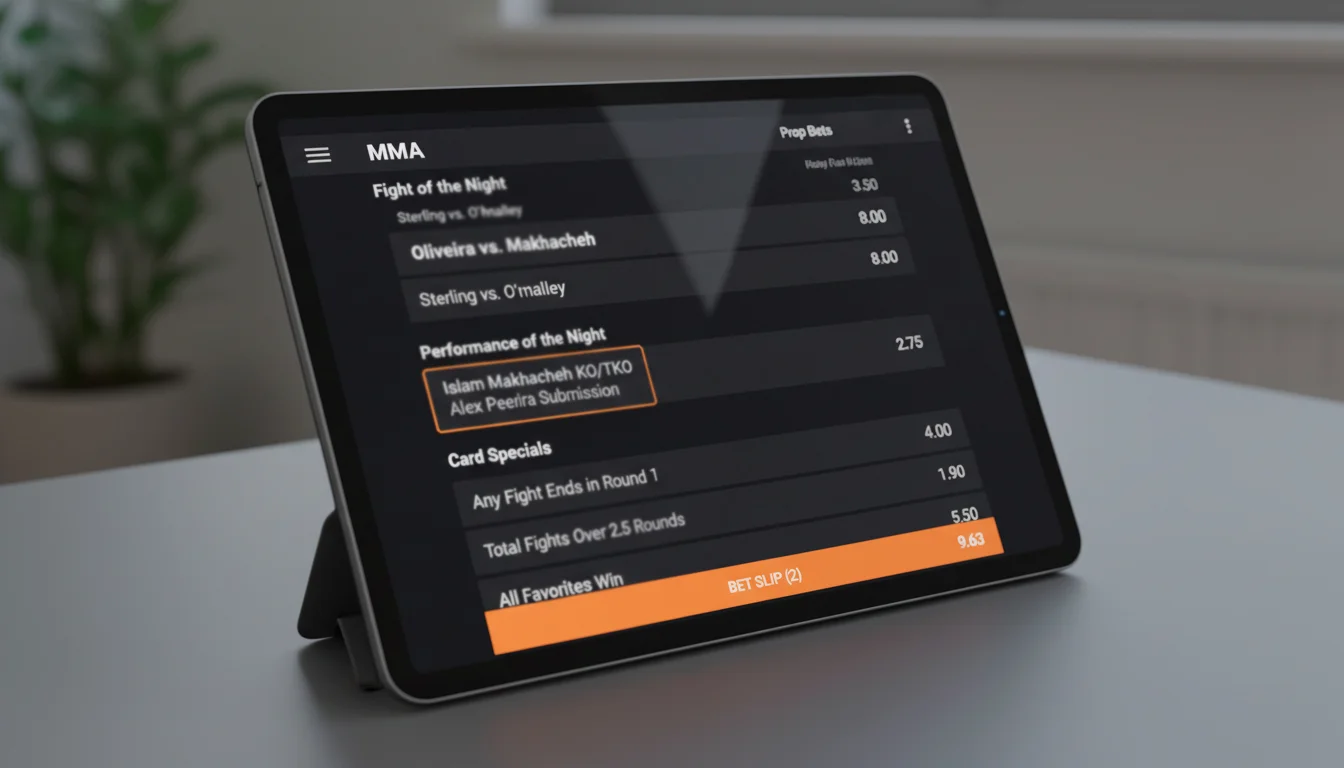
UFC Mobile Betting Apps in the UK: UX, Speed, Safety
 Available in US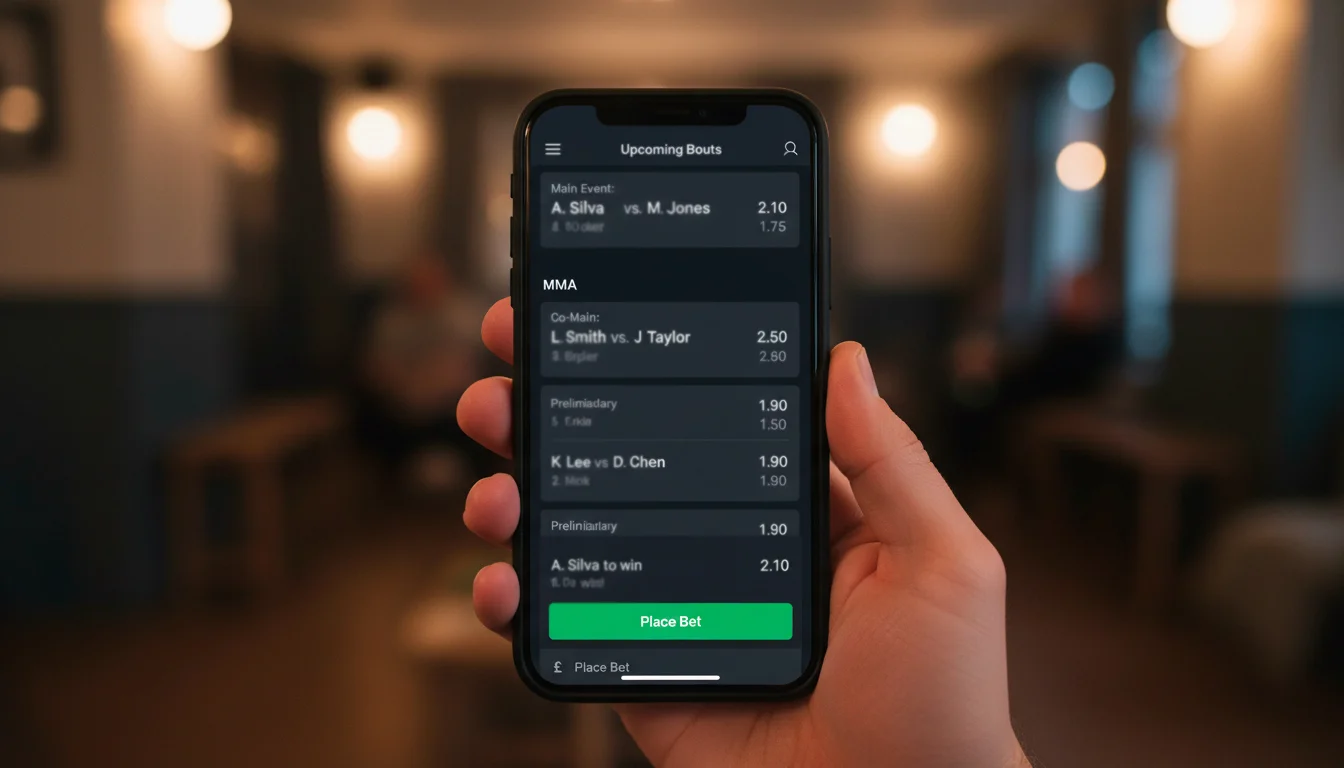
I watch UFC cards on two screens now. The main event is on the TV. The app is on the phone, held in the left hand, thumb resting on the stake box. That’s the standard setup for any UK punter who’s been in this long enough to know that the bet you don’t place in the twelve seconds between rounds is a bet you usually shouldn’t have placed at all. The whole calculus of UFC betting has shifted to mobile, and the apps have either adapted to fight-night pacing or they haven’t.
74% of UK in-play wagers are placed on phones or tablets. That’s not a trend, that’s the entire market. Which means the question “which UFC app is best” isn’t really about bonuses or odds — those are table stakes. It’s about whether the app can handle a 3am bet slip between rounds without freezing, whether the biometric login actually works when your hand is greasy with pizza oil, and whether the notifications are useful or just noise. Every punter who’s stayed in the game for more than a year has strong opinions on these questions, because every punter has been burned at least once by an app that couldn’t keep up.
Native App vs Browser: What Actually Matters on Fight Night
The debate between native apps and progressive web apps is mostly theological. In practice, native apps on iOS and Android are faster, handle notifications better, and crash less often. That’s not because browsers are bad — it’s because the UK sportsbooks that bother with native apps usually also bother with the engineering rigor that native app stores enforce. Apple and Google’s review processes catch bugs that a company might otherwise ship to the web without noticing.
The gap shows up in specific moments. A native app opens in under a second from a cold start. A browser-based app needs three to five seconds to load, authenticate, and pull current odds — which is a lifetime in the 60-90 second window between UFC rounds. If you’ve ever watched a friend scramble to refresh a browser tab between rounds while you’ve already placed a bet, you’ve seen the gap manifest in real time.
Native apps also handle background updates better. When the market suspends during a takedown attempt and reopens fifteen seconds later at different prices, a native app notifies you through system-level push. A browser-based app requires you to have the tab active and focused, or you miss the reopen. For in-play UFC betting, where the edge often lives in catching a reopen at a stale price, this difference is decisive.
The counter-argument for browser-based access is simple: you don’t have to install anything, the account works across devices, and you’re not tied to one operator’s ecosystem. For casual punters who bet one or two fights a month, that flexibility matters more than the two-second loading gap. For anyone who’s serious about live-market activity across multiple cards, the native app is the default and the browser is the backup.
Bet-Slip Speed and Stake Input Friction
The single biggest UX differentiator between UK UFC apps is how fast you can go from “I want to bet this” to “bet placed”. The leaders do it in three taps: select market, type stake, confirm. The laggards add four or five extra taps — confirmation dialogs, secondary verification, bet-slip animations that waste a second of real-time movement in a suspending live market. Between rounds, every tap is a tax.
Stake input is where the gap widens. Good apps let you type stake directly or pick from quick-stake buttons that reflect your usual unit size. Bad apps force you through a numeric keypad that’s slower to summon, a stake slider that requires fine motor control on a small screen, or — worst of all — a “suggested stakes” dropdown that opens a modal. On a laptop, these choices are trivial. On a phone at 3am, they’re the difference between a bet that lands and a bet that missed.
The quick-stake buttons on UK operator apps are configurable in most cases. I set mine to £10, £25, £50, £100 — my standard unit sizes for UFC betting. A well-designed app saves those preferences and applies them across every bet slip. A poorly-designed app resets them between sessions, or forces you to reconfigure them per sport. If the app forces you to re-enter your unit size before every live bet, you’re going to miss fights — and you’re going to build habits that reward speed over accuracy, which is backwards.
A trap worth mentioning: some apps default the bet-slip stake to the last stake you placed. That’s helpful when you’re staking consistently but dangerous if you just placed an unusually large or small bet and forgot to reset. Check every stake before confirming, every time, even if the interface suggests you’ve already done so. The mechanical discipline matters more than the app’s convenience features.
Biometric Login and KYC on Mobile
Face ID and fingerprint login are table stakes on every major UK UFC app now, and for good reason — you don’t want to be tapping a password between rounds. The better apps authenticate in under half a second and drop you directly into the bet slip you were on last. The worse apps authenticate fine but then force you through a “welcome back” screen, a notification permission request, or an upsell for some deposit promotion, all of which you have to dismiss before you can actually place a bet.
The 24.4 million active accounts with online gambling operators in the UK in the 2024/25 financial year means the sportsbook world is heavily invested in authentication friction — how to balance security with speed. The UKGC’s regulatory expectations push operators toward stronger identity verification, which adds steps on account opening but should be invisible at login if the app is designed well.
Know Your Customer verification on UK sportsbooks happens mostly at account creation now, with some operators doing additional checks when deposits pass certain thresholds. The financial vulnerability threshold fell to £150 per 30-day rolling period from 28 February 2025, meaning punters hitting that level of monthly deposits may trigger a light-touch affordability review. The exact trigger and the friction it causes varies by operator, but expect some brief account review at that level — processed through the app rather than via phone or email in most cases.
The timing of KYC friction matters. A well-designed UK app handles account verification during quiet periods, prompting you for documents during weekdays rather than mid-PPV. A poorly-designed one can freeze your account during a fight card, leaving you watching live action with a bet you can’t place. Operator reliability during peak UFC windows is worth testing before you settle into an app for serious use.
Push Notifications: Useful vs Nagging
Push notifications are where app design philosophy shows up most clearly. The best UK UFC apps let you configure notifications granularly — “notify me when in-play markets reopen for fights I’ve bet on”, “notify me when my cash-out offer crosses a threshold I set”, “notify me when significant line movement happens on a fight I’ve been watching”. The worst default to maximum notifications and bury the controls so deep that you can’t find the unsubscribe.
The worst offenders send promotional notifications during UFC cards — “double your next £20 bet!” while a fight is live. That’s deliberate: the operator knows you’re engaged, hot, and likely to tap anything that pops on the screen. A well-regulated app separates transactional notifications (your bet settled, your cash-out expired) from promotional ones (bonus offers) and lets you opt out of the latter without losing the former. A badly-regulated one bundles them together and forces you to accept all or none.
UK punters should know that GamCare takes over 55,000 calls per year on its National Gambling Helpline, and aggressive push notifications during peak betting windows contribute to the problem patterns that send people to that helpline. Set notifications to “transactional only” at account opening, and revisit the settings every few months because operators add new notification categories that default to “on”. If your app sends promotional pushes during UFC cards and you can’t easily disable them, that’s a flag about how the operator treats the rest of the relationship.
Mobile RG Tools: Deposit Limit, Reality Check, Time-Out
Every UKGC-licensed app in the UK has to offer responsible gambling tools — deposit limits, loss limits, reality checks, time-outs, self-exclusion. What varies is how easy the tools are to find and how frictionless they are to set. The good apps put them one or two taps into the main menu, under a clearly-labelled “limits” or “safer gambling” section. The bad apps bury them three levels deep and surface them only when account activity hits regulatory thresholds.
The deposit limit is the single most effective tool. You set a cap per day, week, or month. Once you hit it, the app won’t let you deposit more, regardless of account balance or requested amount. Unlike most self-imposed restrictions, this one has a built-in cooling-off period when you try to raise it — typically 24 hours on UK sportsbooks. That delay is the point: it forces a pause between the impulse to increase the limit and the ability to act on it.
Reality checks are timed pop-ups that interrupt your session after a period you set — usually 30, 60, or 90 minutes. The pop-up tells you how long you’ve been active and how much you’ve won or lost in the session. You can dismiss it and continue, but the interruption is deliberate — it’s designed to break the automaticity of extended sessions, which is the pattern most closely associated with accumulated losses.
Time-outs are short self-exclusions — typically 24 hours, 7 days, 30 days. You can apply one on yourself instantly, and the app locks you out for the period selected. Time-outs reset nothing — your account balance stays, your open bets settle normally — but they prevent you from placing new bets during the period. Worth knowing exists; underused by punters who could benefit from them.
The full responsible-gambling tool menu varies by operator, but the core set (deposit limit, reality check, time-out, self-exclusion) is mandatory across all UKGC-licensed apps. If any of those is missing or buried, the operator has a design problem that’s worth penalising with your choice of where to play. The broader framework for responsible UFC betting covers how these tools fit into a sustainable approach rather than being decorative features.
The App You’ll Actually Use at 3am
The UFC mobile app you settle on isn’t the one with the shiniest features or the biggest welcome bonus. It’s the one you can operate one-handed, half-asleep, between rounds of a fight you care about. Speed, clarity, and sane defaults matter more than flashy bet builders. Reliable biometric login, clean notifications, and easily-accessible RG tools matter more than promotional upsells. And above all, an app that respects your attention during fight nights — not one that fights for more of it — is the sustainable pick.
Test apps during slow periods. Place small bets during prelims to learn the bet-slip flow. Configure notifications before you need them. Set deposit limits before a big pay-per-view, not after a losing streak. That’s the work that makes the 3am decision boring rather than chaotic. The mechanics of the app matter because fight-night pacing doesn’t forgive friction.
Do UK UFC betting apps require biometric login at every launch?
Most do by default, but the setting is configurable. You can switch to password-only login in the app’s security settings, though biometric is faster and less error-prone during live UFC cards. Biometric login also works better one-handed, which matters when you’re holding a phone and watching a fight simultaneously.
How fast should a bet slip settle on a UK-licensed app during a live fight?
Under two seconds from tap to confirmation on any well-engineered UK UFC app. If your bet slip is taking longer, you’re likely on a browser-based version or an app that hasn’t been updated recently. In live markets where prices move every ten seconds, consistent sub-two-second settlement is the minimum viable performance.
Prepared by the ufc bet Online editorial staff.