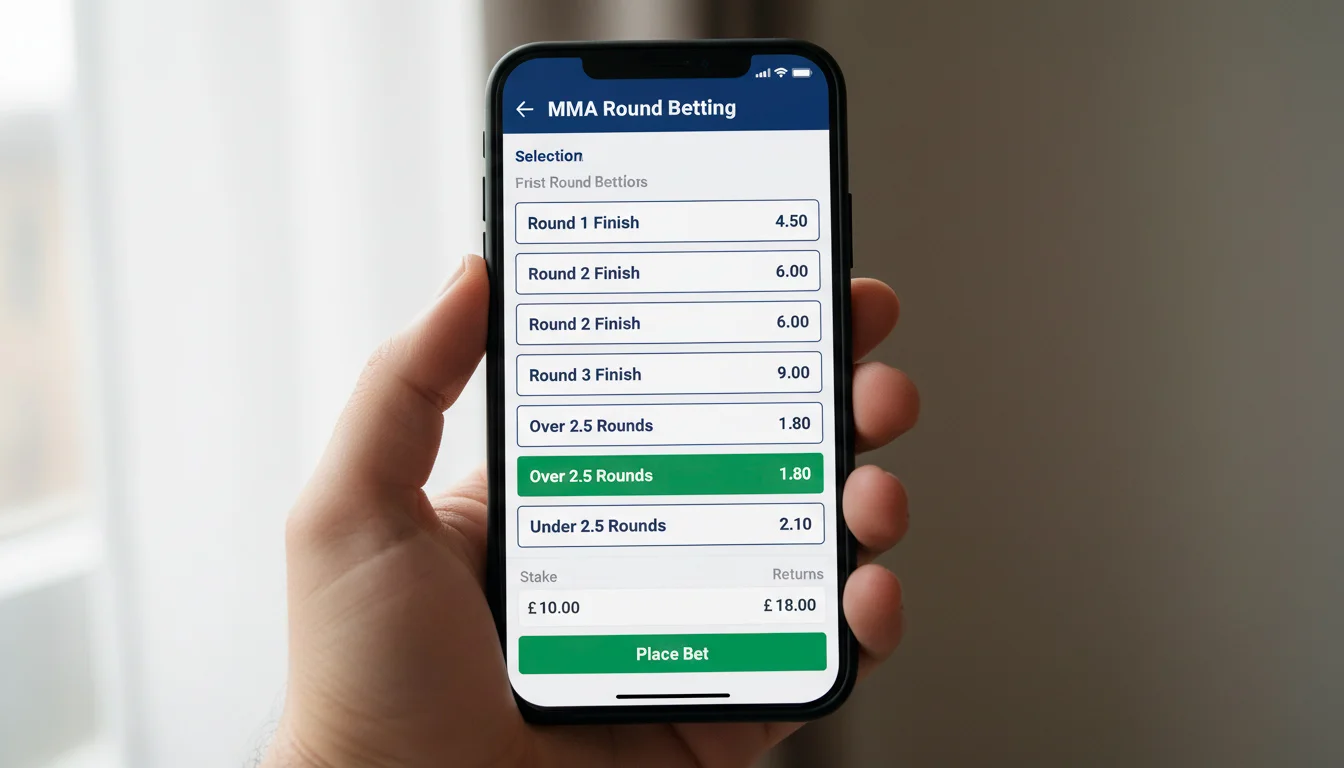
Financial Vulnerability Checks: What UFC Punters Encounter at £150
 Available in US
The email landed at 9.47am on a Monday. “As part of our customer protection obligations, we need to ask you a few questions about your recent account activity…” I’d deposited £180 that month on UFC bets across two cards, and the sportsbook had hit the new threshold trigger. A friendly exchange, a confirmation that the activity was consistent with my means, and the account was back to normal within 48 hours. But a lot of UK punters aren’t prepared for that email, don’t know what the check is, and either panic into bad decisions or feel like they’re under suspicion for something they haven’t done wrong. Neither response is helpful.
The financial vulnerability threshold fell to £150 per 30-day rolling period from 28 February 2025. That number is now the default trigger for light-touch affordability reviews across UKGC-licensed operators, and every UK UFC punter who bets with any consistency will eventually encounter one. Understanding what the check is for, what information it requests, and how to respond sensibly is one of the least-discussed but most practical pieces of knowledge for modern UK betting.
The £150 Light-Touch Threshold
The threshold is per operator and per 30-day rolling window. If you deposit £100 on a Monday and another £60 the following Wednesday, you’ve crossed £150 within 30 days on that specific operator and may trigger the check. If you deposit £100 across two operators — £50 each — neither individually triggers the threshold, though operators do share relevant information through UKGC channels when broader patterns emerge.
The 30-day rolling window is the practical detail that catches people out. It’s not calendar-monthly — it’s always the last 30 days from any given point. A deposit on 15 April is still “within the rolling window” on 14 May, so deposits that seem well-spaced by calendar month can compound into the threshold trigger.
The check itself isn’t automatic restriction. It’s a light-touch review designed to confirm that a punter’s gambling activity is consistent with their means. UK sportsbooks typically request information that can be verified quickly — confirmation of income source, perhaps a recent payslip or bank statement, occasionally a quick conversation about how your gambling fits your broader financial position. The process takes hours or days, not weeks, and most punters complete it without any meaningful friction beyond the administrative step.
The intent, as articulated by the UKGC, is to identify situations where gambling activity appears to exceed what a punter’s income can sustain. The £150 trigger is intentionally set at a level that catches a meaningful number of punters — the goal is exposure to the process rather than a narrow targeting of high-stakes players. Most checks clear quickly because the punter’s activity is genuinely within their means.
How the Check Actually Works
A typical light-touch affordability check runs through one or two standard channels. The sportsbook sends an email or app notification requesting some form of confirmation. This might be a simple income declaration — you state your income range through a drop-down, confirm the source, and the check closes. Or it might be slightly deeper — a request for a recent bank statement, payslip, or other financial document uploaded through the sportsbook’s secure portal.
The information requested is intentionally narrow. Operators aren’t asking for your comprehensive financial profile — they’re asking for enough information to confirm that your gambling activity is a small and sustainable portion of your disposable income. A punter earning £40,000 per year with £160 in monthly sportsbook deposits is comfortably within any reasonable affordability assessment. A punter earning £15,000 with the same £160 monthly deposits raises more questions and may prompt additional conversation.
The process is conducted through the operator’s customer service channels, usually with dedicated “customer protection” teams rather than standard account support. The conversations I’ve had with these teams have been professional and not adversarial. They’re not trying to catch anyone; they’re trying to clear the regulatory requirement that the UKGC imposed on them.
Timeframes vary. Quick checks complete within 24-48 hours. Deeper reviews, which are less common at the £150 threshold, can take 3-7 business days. During the review period, the specific restrictions depend on the operator — some pause new deposits while the check is open, some allow continued betting from existing balance, some freeze the account entirely. Knowing your operator’s policy before you’re in the middle of a review is useful planning.
Enhanced Checks at Higher Volumes
Beyond the £150 light-touch threshold sits a set of enhanced check triggers for higher-volume activity. These aren’t formally named with a single threshold, but the UKGC’s guidance suggests that sustained activity above £500/month or dramatic single deposits of £1,000+ can trigger more intensive review.
Enhanced checks go deeper. Beyond the basic income confirmation, operators may request source-of-funds documentation — proof of where specific large deposits came from. They may ask for bank statements covering longer periods. They may request a conversation, by phone or video, to discuss the activity pattern with you.
The 24.4 million active UK online gambling accounts generate a huge volume of activity, so enhanced checks are applied selectively — only to accounts that exhibit specific risk patterns beyond simple volume. Volume alone, if it’s consistent with your declared income, rarely triggers enhanced review. Rapid escalation of deposit volume, pursuit of losses, or patterns of late-night high-stakes activity are the behavioural patterns that tend to trigger the deeper check rather than the simple monthly total.
For UFC punters who bet actively — multiple fight cards per month with meaningful stake sizes — enhanced check contact is a realistic possibility over a year or two of sustained activity. The practical preparation is to keep your KYC documents current, have income documentation readily accessible, and be ready to confirm that your activity is sustainable relative to your financial position. The punters who struggle with enhanced checks are usually those whose activity genuinely exceeds what they can afford; for most disciplined punters, even enhanced checks clear with minimal friction.
What to Do If You Get a Check
If you receive an affordability check notification, the answer is simple: respond promptly and honestly. Operators aren’t trying to catch you in anything. They’re completing a regulatory obligation that applies to all UK-licensed sportsbooks equally. Your goal is to confirm your activity is within your means, which is usually a short exchange that doesn’t require anything complicated.
Provide the information requested in the format the operator asks for. If they want a confirmation of income via a drop-down form, fill it out. If they want a bank statement uploaded, upload the most recent one available. Don’t try to negotiate the process — operators can’t waive it because the UKGC requires it.
Don’t lie about income. If you declare income that doesn’t match your activity pattern, and the operator spots discrepancies through secondary verification, the consequence is typically account restriction or closure. The check isn’t designed to be gotcha-style, but patently inaccurate declarations do create problems.
Andrew Rhodes, Chief Executive of the UKGC, has been vocal about consumer protection concerns in this area. “The consumers who are spending the most on gambling were between two and four times as likely to have a debt management plan as the rest of the credit-check population… between two and five times more likely to have a debt default in the last 12 months,” he said at the IAGR 2025 Conference in October 2025. That’s the population context the affordability checks are designed to identify and intervene with. If your situation doesn’t match that profile, the check clears and you carry on.
If you’re genuinely concerned that your gambling activity is exceeding your means, the affordability check is not just a regulatory trigger — it’s an opportunity to pause and recalibrate. You can request a deposit limit reduction, a time-out, or a self-exclusion through the operator directly. The tools for managing UFC betting responsibly include these mechanisms, and the affordability check process is the natural point to use them if relevant.
The Debate: Friction vs Safety
Affordability checks are politically contested within UK gambling policy. The industry’s position is that they introduce unnecessary friction that harms legitimate consumers while pushing problem gamblers toward unregulated offshore operators. The consumer protection position is that checks are inadequate relative to the scale of gambling harm and should be more comprehensive.
The industry data frames the friction point: the 24.4 million active UK accounts mean even a small percentage of check-triggered frustration translates to millions of individual punter experiences. If 5% of checks cause account closure or extended restriction, that’s hundreds of thousands of consumers affected annually. The operator argument is that most of these consumers aren’t at harm risk — they’re simply hitting the threshold because they bet actively on things they enjoy.
The counter-argument from harm-mitigation advocates focuses on the consumer data. GambleAware’s 2024 research identified 5.3 million UK adults who want to reduce or quit gambling, and 1.8 million who meet the criteria for “at-risk” classification. The scale of underlying harm is substantial, and affordability checks are one of the few mechanisms that create structural barriers to escalating gambling activity.
The £150 threshold represents a compromise position between these views. It’s low enough to engage a meaningful percentage of active punters in the check process, high enough that recreational punters placing occasional bets rarely encounter it. Whether it’s the right balance is a question that won’t be settled empirically for several years, and the threshold itself may be adjusted as data emerges about its effectiveness.
For UK UFC punters, the debate is mostly abstract. What matters practically is responding to the check if you get one, understanding what information it requests, and keeping your activity at levels that align with your actual financial position. The framework is designed to be a speed bump rather than a barrier; if you’re treating UFC betting as entertainment within your means, the check clears and your betting continues.
Preparing Before the Next Threshold Hit
The £150 affordability check isn’t a punishment or a suspicion — it’s a regulatory feature of the modern UK betting landscape. Every serious UFC punter will encounter one eventually, and the preparation is straightforward. Keep your KYC documents current. Know your operator’s process. Respond honestly when prompted. Use the check as a moment of reflection on whether your activity genuinely matches your financial position rather than as an obstacle to fight against.
The process is designed to be light-touch for most punters and deeper for those whose activity raises genuine concerns. Falling in the first group makes the check a brief administrative step; falling in the second group is a signal worth taking seriously. Either way, knowing the threshold exists, what triggers it, and how it works removes the surprise element when the email arrives on a random Monday morning.
Will an affordability check leave a mark on my credit file?
Light-touch affordability checks don’t involve formal credit inquiries that appear on your credit file. They rely on information you provide directly to the operator or on soft verification that doesn’t leave a hard footprint. Enhanced checks at higher volumes can involve credit reference agency queries, but these are typically ‘soft searches’ that don’t affect your credit score even when they appear on your detailed file.
Can a UK sportsbook freeze my account while a check is pending?
Policies vary by operator. Some pause new deposits during the check but allow continued betting from existing balance. Others freeze the account entirely until the check completes. A few allow normal account activity during the review. Check your specific operator’s terms under ‘affordability’ or ‘customer protection’ before you’re mid-check; the policy is usually clearly documented but rarely read in advance.
Created by the ”ufc bet Online” editorial team.