UFC Moneyline Betting Explained for UK Beginners
 Available in US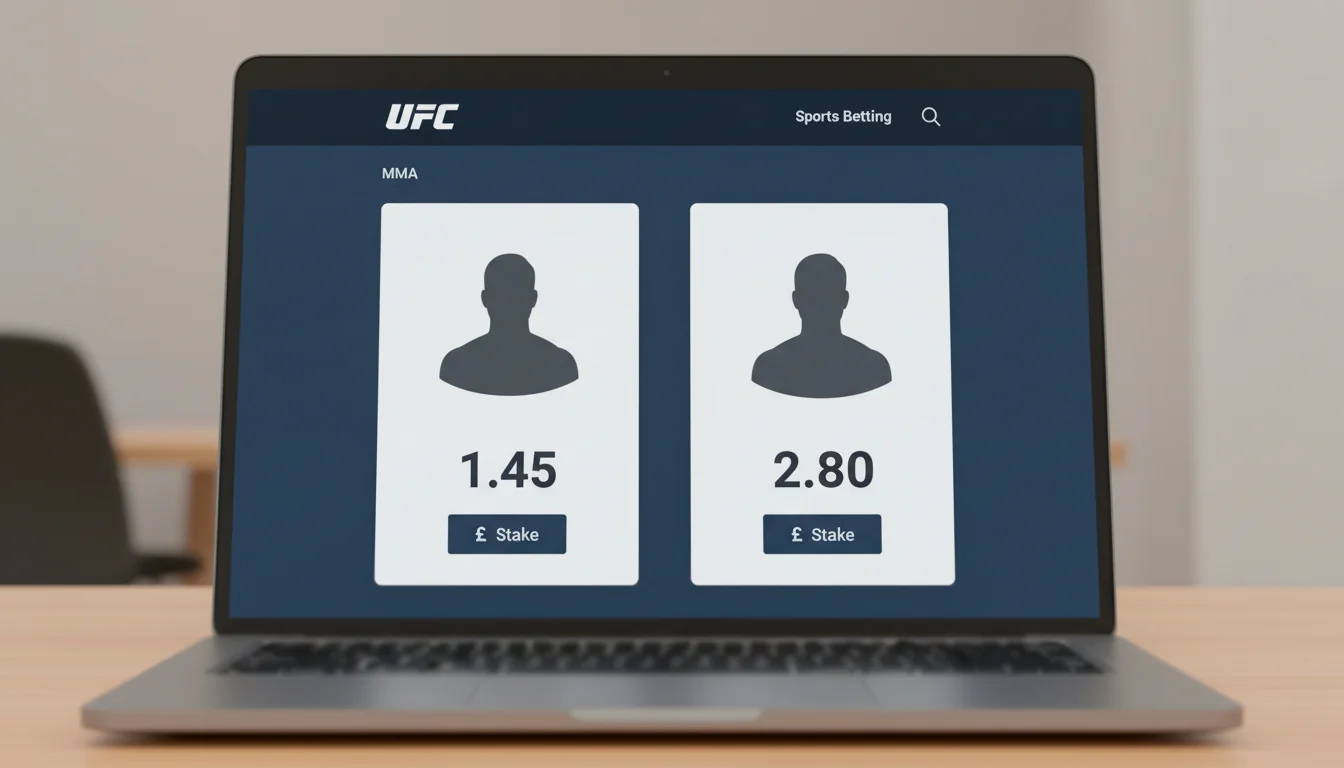
Every beginner I’ve ever coached through their first UFC bet starts in the same place: the moneyline. It’s the most honest market on the board — pick who wins, get paid if you’re right, done. No rounds, no methods, no bet builders, no trying to guess whether a middleweight will eat a Calf kick and fold in round two. Just two fighters, two prices, one question.
And yet moneyline betting is where I see the most avoidable mistakes in UK forums and punter chats. People back chalk with no attention to the price. They back underdogs on a whim because the payout looks juicy. They string three heavy favourites into a parlay and don’t understand why they lose money over a season even though most of their picks win. Moneyline looks simple because the question is simple. The pricing is not.
What a Moneyline Bet Actually Covers
A moneyline bet pays out if your fighter gets their hand raised, regardless of how it happens. Knockout in the first ten seconds, submission in round three, a unanimous decision you had to squint to understand — all of them settle the same way. That’s the appeal and also the source of the most common settlement confusion, because MMA has several edge cases that don’t exist in football or tennis.
A split decision win counts exactly the same as a unanimous decision for moneyline purposes. A technical decision — a fight stopped early because of an accidental foul with the cards going to the scorecards — also counts as a win for the fighter the judges favour. A disqualification means the other fighter wins the moneyline. That last one catches people out occasionally, because DQ wins are rare in UFC but not unheard of.
The one outcome that creates genuine ambiguity is a “no contest” ruling. If a fight is waved off because of an accidental eye poke or an unintentional illegal strike and the ref rules no contest, most UK sportsbooks void the moneyline bet and return your stake. No winner, no loser, no payout. Same treatment if a fighter is injured in a freak pre-fight moment and the bout never happens. Check the sportsbook’s T&Cs — the language is usually under “abandoned match” or “no result” — because the fine print varies slightly between UKGC-licensed operators.
Reading the Price
Here’s where moneyline betting stops being simple. UFC decimal odds are a probability in disguise. A price of 1.40 is the market telling you it expects this fighter to win roughly 71% of the time. A price of 3.00 is the market saying roughly 33%. Your job is to decide whether the market’s estimate is too generous to you or not generous enough.
The backdrop is useful here. UFC favourites won 72% of fights in 2024, which is almost exactly what a 1.39 decimal price implies. So on average, across a year of cards, the market is pricing the favourite/underdog split with reasonable accuracy. You don’t beat it by betting “favourites win more often” — the price already knows that. You beat it by finding the specific fights where the market has miscalculated the matchup, then backing whichever side you think is under-priced.
A useful discipline: before looking at the odds, write down your own estimate of each fighter’s win probability. Then look at the implied probability from the sportsbook. If your number is meaningfully higher than the book’s — say, you think Fighter A wins 55% of the time and the price implies 45% — you have a potential bet. If your number is lower or tied, walk away. This is the entire skill of moneyline betting compressed into one habit, and it’s the single biggest differentiator between punters who track positive over time and punters who don’t.
Draws, No Contests and What Happens to Your Stake
A draw in MMA is rare but real. Majority draw, split draw, unanimous draw — all exist in the rulebook. For moneyline purposes, most UK sportsbooks settle a draw as a void and return your stake. A few quote a three-way moneyline on championship fights specifically, where you can bet on the draw as a third option at a long price — typically above 25.00 decimal. That’s a lottery ticket and not a strategy, but worth knowing the market exists.
No contest, as mentioned above, is also a stake-return scenario on every UKGC-licensed book I’ve used. So is a fight being cancelled outright before the opening bell. The phrase you’re looking for in the sportsbook’s rules is “completed bout” — most operators require that at least the opening round start before the bet is live. If a fighter is pulled at the weigh-in and the fight is scrapped entirely, your moneyline bet gets voided.
The edge case that trips people up is a “bout at catchweight” scenario. If Fighter A misses weight and the fight proceeds as a catchweight, moneyline bets generally stand. If Fighter B refuses to take the fight and it’s cancelled, you get your stake back. If Fighter A is pulled after a failed medical and a short-notice replacement steps in, some books void the bet, others let it ride against the replacement. This is genuinely operator-specific, and it’s the one area where reading a UK sportsbook’s T&Cs actually pays off.
Chalk vs Underdog
The easy trap, especially for newcomers, is to assume that because favourites win 72% of UFC fights, backing chalk is a printing press. It isn’t. Historical underdog win rates sit around 35%, which means the market has correctly priced most fights within a tight band. If you back a chalky 1.25 favourite and the implied probability is 80%, you need that fighter to win genuinely more than 80% of the time for the bet to be positive expected value. The historical hit rate doesn’t help you if you’re overpaying relative to the specific fight.
Underdogs get similar treatment. An underdog priced at 3.50 implies a 28.6% chance to win. If you think the real chance is 30%, that’s a tiny positive-expectation bet — 1.4 percentage points of edge — and you’ll need hundreds of bets at that thin margin to see it pay out reliably. If you think the real chance is 40%, now you have meaningful edge and a reason to put real money on it.
The price ranges I pay closest attention to are the 1.80 to 2.50 bracket, where the market is genuinely uncertain and the margin for mispricing is widest. Heavy favourites — anything under 1.30 — are almost never worth backing solo because the payout is so small that even a strong opinion yields negligible expected value, and one unexpected loss wipes out weeks of careful chalk picks. Massive underdogs — above 5.00 — are usually priced long for good reason, and the cases where they’re under-priced require a very specific read on the matchup.
Common Moneyline Mistakes UK Punters Make
The first trap is narrative bias. A fighter just knocked out a top-five contender in spectacular fashion, now everyone on social media is calling them “the next champion”, and the sportsbook has cut their next moneyline from 2.10 down to 1.55. The public moved the line. The underlying skills haven’t changed much in a month. If you back the hype price, you’re paying a premium for the story and the highlight reel, not for the actual probability. Experienced handicappers fade these moves more often than they ride them.
The second trap is the short-price parlay. Three UFC favourites at 1.30, 1.40 and 1.50 multiplied together give you a combined price of 2.73. On paper it looks like a solid value play on heavy chalk. In practice you’re multiplying three slightly-negative-expectation bets by each other, the overround compounds on every leg, and the actual probability of all three winning is around 33% — lower than the 37% that a 2.73 price implies. Over a season of these parlays, you bleed money slowly and consistently.
The third trap is emotional staking. Everyone does it at least once: the fight you’re looking forward to all week, the fighter you’ve watched on Contender Series, the rivalry that has you glued to the weigh-ins. When there’s already an emotional investment in the outcome, the tendency is to stake more than usual because you’d “rather be right about this one.” The staking pattern doesn’t match the confidence level. Flat units exist for exactly this reason.
The fourth, and maybe the most common, is ignoring closing line movement. If you bet a fighter at 2.40 on Monday and the line closes at 2.00 on fight night, the market has strongly disagreed with you — or agreed with you in ways you didn’t see. Either way, tracking whether the price drifted toward or away from your pick is the quickest way to evaluate whether your reads are actually in step with the sharp money. Build the habit of checking the closing line even on bets you’ve already settled.
Before You Tap the Next Chalk
Moneyline betting is the entry drug to UFC wagering because the question is clear, the settlement is transparent, and the market is deep enough that you can find price movement on almost every card. It’s also the market where the biggest mistakes compound fastest, because “just pick the winner” feels so approachable that punters skip the probability work entirely.
Treat every moneyline price as a probability statement from the sportsbook. Compare it to your own probability estimate. Back it only when your number meaningfully beats the book’s. Avoid short-price parlays, fade the hype chalk, watch the closing line, and stake flat. Do that, and you’ll already be ahead of most UK punters betting UFC on pure instinct. That’s the foundation every other market builds on — method of victory, round betting, props — none of them work without clear eyes on the moneyline first.
What happens to my UFC moneyline bet if the fight is ruled a no contest?
Most UKGC-licensed sportsbooks void the bet and return your stake. A no contest means neither fighter is credited with the win, so there’s no moneyline outcome to settle. Check your operator’s T&Cs under ‘abandoned match’ or ‘no result’ for the exact wording.
Is it ever worth backing the heavy moneyline favourite on a UFC card?
Only when your own probability estimate clearly beats the implied price. A fighter at 1.25 needs to win more than 80% of the time for the bet to be positive expected value. One loss at that price wipes out weeks of correct picks, and historical favourite hit rates don’t guarantee the specific matchup is fairly priced.
Prepared by the ufc bet Online editorial staff.