UFC Short-Notice Replacements: Why 63% Lose and What to Do
 Available in US
The text message arrives at 4pm on a Thursday. A main event fighter has pulled out with an injury. A replacement is being announced. Phones across the UFC betting world simultaneously light up because everyone knows what’s about to happen: the market will move, the replacement will be priced as a heavy underdog, and recreational punters will pile onto the longshot price thinking they’ve spotted value. The math says they usually haven’t.
Fighters taking bouts on less than one month’s notice lost 63% of the time in the 2020 Sports Gambling Podcast dataset. Let that settle. Nearly two out of three short-notice fighters lose. The 63% figure is one of the most actionable signals in UFC betting because it’s large, consistent across eras, and mostly ignored by the betting public. When a short-notice replacement gets announced and the market reprices, the question isn’t whether to bet the replacement at a longer price — it’s whether to bet against them.
The 63% Loss Rate in Short-Notice Spots
The 63% figure covers fighters accepting bouts inside 30 days of fight night, based on 323 fights in the Sports Gambling Podcast analysis. Short notice ranges from “one week’s notice” to “three weeks’ notice”. All of these categories underperform, and the shorter the notice, the worse the record tends to be. A fighter accepting on four days’ notice has a win rate closer to 25%; a fighter accepting on 21 days has closer to 42%.
The reasons are structural. A normal UFC fight camp runs 8-10 weeks, with the final four weeks escalating in intensity before a taper in the last week. Short-notice replacements skip most of this preparation — they’re usually picking up camp mid-cycle from a different fight they were preparing for, or grinding through whatever training base they had from their last event. The cardio isn’t tuned. The fight-specific game plan doesn’t exist. The weight cut, if they’re not already in the right division, is a rushed exercise in dehydration rather than a controlled process.
UFC underdogs win approximately 35% of fights historically, and short-notice underdogs hit at rates even lower than that — 37% is the replacement figure, versus 35% for the general underdog population. The gap isn’t huge, but it exists, and it’s in the wrong direction relative to what the market might expect for “live dogs”.
The short-notice effect isn’t distributed evenly. Established ranked fighters who take short-notice bouts perform better than unranked fill-ins, though still below their normal standard. Fighters who were already scheduled to compete on the same card (moving up from an earlier fight) perform noticeably worse because they’re adjusting to a completely different matchup in days. Fighters coming off recent wins perform better than fighters coming off losses or layoffs.
Why Short-Notice Fighters Struggle
The first factor is cardio. UFC fights demand specific energy system conditioning — the ability to explode for takedown entries, then recover; the ability to maintain striking volume through 15 or 25 minutes; the ability to wrestle in the clinch for extended periods. This conditioning isn’t generic fitness. It’s built through weeks of specific training sessions that mirror fight pace and duration.
Short-notice fighters haven’t done those sessions at the intensity their fight will require. They might be in shape for one-mile runs or jiu-jitsu rolling, but they’re not in shape for three five-minute rounds of MMA against a specifically prepared opponent. The cardio shortfall shows up in rounds two and three, when the short-notice fighter visibly slows, drops their hands, and starts eating shots they normally would have slipped.
The second factor is game-plan absence. The fighter they were originally training to fight had specific strengths and weaknesses. A new opponent with 10 days to prepare for means 10 days of re-studying tape, re-writing the game plan, and running through drills that don’t match what the body is already tuned to execute. The mental shift is more disruptive than the physical one. Fighters with years of championship-level experience can adapt faster, but the adjustment is real and it shows up in round-one pacing that feels hesitant or reactive rather than proactive.
The third factor is weight management. Even if the fighter is already near the contracted weight, the final cut on short notice is riskier. The body hasn’t been priming for the cut across a normal camp timeline. Glycogen and hydration protocols are compressed. Fighters accepting on 14 days of notice or less often enter fight week heavier than they’d like and cut more aggressively than is safe.
The fourth factor is mental. Accepting a short-notice bout is a financial decision as much as a competitive one — the fighter is getting paid, showing up, taking the shot. That’s admirable professionally but costly competitively. The fighter knows they’re undercooked, knows the odds are against them, and walks into the Octagon with that awareness. Their opponent, meanwhile, had a full camp to study them and prepare specifically.
Notable Cases: UFC 311 Moicano Example
UFC 311 in January 2025 is the recent case study that most UK punters will remember. Arman Tsarukyan pulled out of his lightweight title fight against Islam Makhachev on short notice, and Renato Moicano stepped in. UFC 311 drew 240,000 PPV buys — a number that reflected the chaos and the continued interest despite the main-event disruption.
Moicano was priced as a massive underdog in the late repricing, typically 15.00 or longer against Makhachev’s sub-1.10 moneyline. The market’s implied probability for Moicano was around 6-7%. The historical short-notice base rate of 37% would suggest the true probability was closer to 10-12% — meaningfully higher than implied, which creates an apparent edge for backing Moicano.
What actually happened was predictable. Makhachev submitted Moicano in the second round, inside a range of outcomes that fit the standard Makhachev title-defence profile. The 15.00 price on Moicano didn’t hit, and most punters who backed him lost their stake. But here’s the nuance: even when the bet loses, the underlying probability analysis can have been correct. A 10% probability bet at 15.00 is +EV (expected value of 0.10 × 14 + 0.90 × -1 = +0.5% per unit staked), even though the specific outcome in this case was a loss.
The lesson for UK punters isn’t “Moicano was a good bet” or “Moicano was a bad bet”. It’s that short-notice fighters are generally underpriced relative to the public’s perception of their longshot status — but they’re still underdogs who lose most of the time. The 63% loss rate means betting for them is the losing strategy most of the time; betting against them at standard prices is the more common +EV play.
Market Reaction and Closing Line
The market reaction to a short-notice replacement announcement is fast and large. Within 30 minutes of a confirmed replacement, lines have moved dramatically. The original favourite shortens; the new matchup is priced. The speed of the move protects the book from being swept by sharp money but doesn’t guarantee the new pricing is efficient.
Closing line movements typically continue through fight day as more sharp money enters the market. The initial post-announcement move captures 70-80% of the total repricing. The remaining 20-30% comes through Friday and Saturday as sharp analysts run models, compare to historical short-notice rates, and bet where they see mispricing. UK punters who catch the announcement early — within the first hour — often get the best prices; those who wait until fight day frequently pay the closing-line premium.
The direction of line movement on short-notice replacements is almost always the same: the replacement starts as a moderate underdog, then drifts longer as the market absorbs the short-notice effect. If the replacement is announced at 8.00 and the closing line is 12.00, the market has concluded that the short-notice effect is larger than its initial estimate. This happens more often than not; late sharp money consistently pushes short-notice dogs to longer closing prices.
The corollary: if the replacement’s line shortens through fight week — meaning money is coming in on them rather than against them — that’s often a sign that the original favourite has a specific matchup issue with the replacement (styles favouring the replacement, or information that the favourite is also underprepared). Rare, but when it happens, it’s usually meaningful.
How a Disciplined UK Punter Plays This
The highest-EV play on a short-notice replacement is usually backing the original favourite at the new, shorter price. The favourite’s implied probability has gone up because the replacement is priced as a heavier dog, but the favourite’s actual probability has gone up even more because they’re now facing someone who’s less prepared than the original opponent would have been. The gap between the new implied probability and the true probability is where value lives.
A worked example: Fighter A was 1.85 moneyline against Fighter B before the pullout. Fighter C replaces B. Fighter A’s line shortens to 1.45. Implied probability for A was 54%; now it’s 69%. The true probability for A, given they’re facing a short-notice replacement against a more established opponent, is probably closer to 75-80%. Betting A at 1.45 captures that gap, even though the price feels short.
The opposite play — backing the short-notice replacement at a longer price — is occasionally +EV but usually isn’t. You need to believe the replacement’s probability exceeds the implied probability by enough to overcome the sportsbook’s margin. The 37% short-notice win rate suggests replacements priced at 3.00 (implied 33%) are sometimes +EV, but replacements priced at 10.00 (implied 10%) rarely exceed their implied probability. The longer the replacement’s price, the less likely the bet is profitable.
Method-of-victory markets on short-notice fights are typically mispriced toward early finishes. The book expects the more prepared fighter to finish the less prepared one quickly, and prices the first-round finish at shorter odds than the historical rate suggests. The higher-value play is often the “fight goes to decision” or “goes past round 2” market, because short-notice fighters often survive longer than expected — they’re compromised but not always easy to finish, especially if they have veteran experience.
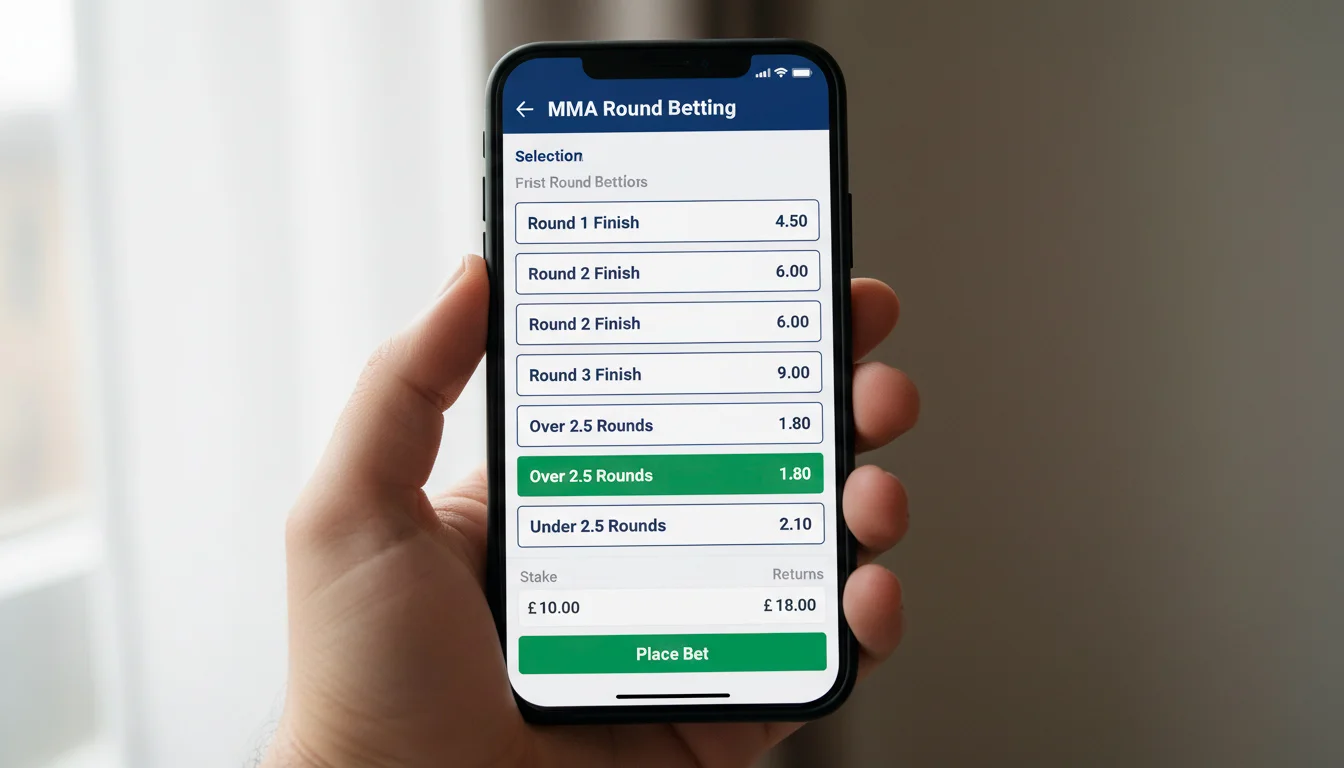
Round betting on the preparation-advantaged fighter tends to be reasonably priced. The first-round finish is attractive if the prepared fighter has clear finishing ability; the rounds 2-3 win is attractive if the prepared fighter’s style is methodical rather than explosive. The key is recognising that the short-notice effect compounds — the replacement doesn’t just lose, they often lose in a specific pattern (faded cardio, late-round finish) that creates value in round-specific markets. Fold this into the broader handicapping framework alongside weight-miss signals and normal matchup research.
The Replacement Playbook Before the Next PPV
Short-notice replacements are the most disruptive and most actionable information events in UFC betting. The market reacts fast but usually doesn’t correct fully, leaving edges for punters who know the 63% loss rate and who can calibrate their response within the first few hours of the announcement.
When a replacement happens, the disciplined approach is: back the original favourite at the new shorter price in most cases, avoid backing the replacement at very long prices, look for value in method and round markets that reflect the likely slow pace of a compromised fighter. Skip the emotional response to the chaos. The mathematics is the same whether you’re betting a routine Fight Night or a pay-per-view reset; the 63% baseline doesn’t care what card it is.
Does a short-notice replacement always shift the moneyline in the opponent’s favour?
Yes, in nearly every case. The short-notice effect is strong enough and consistent enough that markets reliably shorten the prepared fighter’s price when the replacement is announced. The size of the shift varies — major pullouts often see moneyline shifts of 30-50 percentage points in implied probability — but the direction is almost always the same.
Is it ever correct to back the short-notice fighter at a big underdog price?
Occasionally. If the replacement is an established ranked fighter with specific stylistic advantages against the prepared opponent, and the price has drifted to an implied probability below the historical 37% short-notice baseline, there can be value in backing the replacement. These cases are rare, and most long-shot short-notice bets remain -EV, so the default should be skipping them unless there’s a clear matchup-specific reason to engage.
Created by the ”ufc bet Online” editorial team.